Archives

What Are Japan’s 72 Micro-Seasons? | The Calendar That Renames the Year Every Five Days, Explained Gently for Beginners

What Are Japan’s 72 Micro-Seasons? | The Calendar That Renames the Year Every Five Days, Explained Gently for Beginners

The five days beginning August 23rd have a name: wata no hana-shibe hiraku, when the husk around the cotton boll begins to open. Japan keeps a calendar that cuts the year into seventy-two. How it relates to the twenty-four solar terms, the old almanac fossilised inside the word for climate, why not one micro-season has a human subject, how Shibukawa Harumi rewrote the Chinese original for Japan, and the three micro-seasons of Shosho 2026 — a calendar built so a season wouldn't slip past unseen.
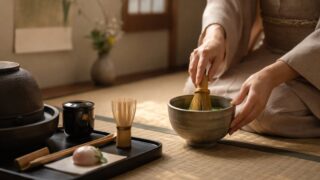
What Is Chabana? | The Single Flower in the Tea Room, Explained Gently for Beginners

What Is Chabana? | The Single Flower in the Tea Room, Explained Gently for Beginners

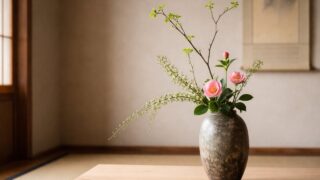
The flower in a tea room alcove is usually one stem, sometimes two — never a bouquet. It is the only living thing in the room. From "flowers as they are in the field," handed down as Rikyū's words, to how chabana differs from ikebana, the rank of the vessel and why baskets belong to summer, the flowers kept out of the tea room, and mukuge, which opens at dawn and closes by dusk — a gentle guide for beginners, entered through one late-summer stem.
What Is Jizō-bon? | The Two Days When a Street-Corner Stone Figure and the Neighbourhood Children Take Centre Stage

What Is Jizō-bon? | The Two Days When a Street-Corner Stone Figure and the Neighbourhood Children Take Centre Stage

After Obon ends, western Japan keeps one more Obon in reserve. Around August 23rd and 24th, the children of a city block become the centre of Jizō-bon. The roadside stone figure is repainted and given a fresh bib, a strand of prayer beads two to three metres across is passed hand to hand, and sweets and a raffle follow. It is not a nationwide custom, and its origins are genuinely unknown — a gentle beginner's guide to the smallest Obon of the summer.
Sweets at a Japanese Tea Gathering | How a Confection Carries the Season in Its Name

Sweets at a Japanese Tea Gathering | How a Confection Carries the Season in Its Name

Once Obon is over, the glass cases in Japanese confectionery shops quietly change. Tea sweets come in two families — moist omogashi and dry higashi — and the sweet always arrives before the tea. Why that order matters, how the serving vessels shift between summer and winter, and how each sweet is given a name drawn from poems and famous places. A gentle beginner's guide, entered through a shop window turning toward autumn.
Why Japanese Tea Bowls Change Shape with the Season | The Summer Hira-jawan and Winter Tsutsu-jawan, Explained Gently for Beginners

Why Japanese Tea Bowls Change Shape with the Season | The Summer Hira-jawan and Winter Tsutsu-jawan, Explained Gently for Beginners

In summer the tea bowl is shallow and wide; in winter it is narrow and deep. Same matcha inside — only the vessel is swapped out. The wide mouth that lets tea cool fast, the narrow one that holds heat in, a summer procedure that makes coolness out of the sound of water, the proper names given to bowls, and Rikyu's line "cool in summer, warm in winter" — along with an honest note about where that line actually comes from. A gentle beginner's guide, written days before Shosho.
The Seven Flowers of Autumn | Japan’s Seven Herbs You Don’t Eat, Explained Gently for Beginners

The Seven Flowers of Autumn | Japan’s Seven Herbs You Don’t Eat, Explained Gently for Beginners

Japan's spring seven go into rice porridge. The autumn seven have one job: to be looked at. Two poems by Yamanoue no Okura, who stood in an autumn field thirteen hundred years ago and counted on his fingers; the names of the seven flowers; the seventh one nobody has ever pinned down; and the one now listed as Near Threatened. A gentle beginner's walk into the start of autumn.
What Is a Zansho-mimai? | Japan’s Letter That Only Says “Still Hot, Isn’t It,” Explained Gently for Beginners

What Is a Zansho-mimai? | Japan’s Letter That Only Says “Still Hot, Isn’t It,” Explained Gently for Beginners

Autumn on the calendar, summer in the air — and into those few unresolved weeks, Japan slips a short letter called zansho-mimai. How the name changes at Risshu, the end-of-August deadline, the Edo-period Obon gifts it is said to have grown from, the summer postcard that disappeared, and the four blocks that make one easy to write. A letter with no business in it, traced gently for those meeting it for the first time.
What Is Okuribi? | Japan’s Obon Sending-Off Fire, Explained Gently for Beginners

What Is Okuribi? | Japan’s Obon Sending-Off Fire, Explained Gently for Beginners

On the last evening of Obon, a fire is lit to see the returning ancestors on their way. It is called okuribi. The small fire at the front door, Kyoto's five mountains lit in sequence on the night of August 16th, Nara's Daimonji burning for the dead and for peace, and the lanterns and spirit boats sent out on water — a fire whose purpose is to go out, traced gently for those meeting it for the first time.
What Are Bonbana? | The Meaning of Misohagi and Hōzuki, Japan’s Obon Flowers, Explained Simply for Beginners

What Are Bonbana? | The Meaning of Misohagi and Hōzuki, Japan’s Obon Flowers, Explained Simply for Beginners

The flowers offered during Obon to welcome the ancestors home have their own name: bonbana. Misohagi, used to sprinkle water; hōzuki, whose red husks stand in for the lantern that lights the road; the old custom of going into the hills to gather them; and how offering flowers before the Buddha grew into ikebana — traced gently for those meeting them for the first time.
What Is Wabi-Sabi? | Japan’s Aesthetic Born from Words for “Miserable” and “Lonely,” Explained Simply for Beginners

What Is Wabi-Sabi? | Japan’s Aesthetic Born from Words for “Miserable” and “Lonely,” Explained Simply for Beginners

Wabi-sabi is the heart that finds beauty in the imperfect and the aging. Surprisingly, both words began with negative meanings. From the wabi raised by the tea ceremony to the sabi polished by haiku poets, and the same gaze flowing through kintsugi and ikebana — we trace it all gently for beginners.