01 / ARCHITECTURE
Teahouse ArchitectureKIMUSUKO LATTICE
Fine kimusuko lattices below, high-ceilinged banquet rooms above. You cannot see in from outside, yet from inside you see everything — the essence of chaya style.
Kanazawa, castle town of Kaga
ひがし茶屋街
Higashi Chaya is Kanazawa's largest teahouse district, in the city's Higashiyama quarter. Chartered by the Kaga Domain in 1820 on the east bank of the Asano River, it has carried the culture of the ochaya — teahouses where geigi entertain — for two hundred years.
Along the stone-paved main street, working teahouses still stand behind the fine bengara-red kimusuko lattices, and shamisen drifts through the lanes at dusk. Designated a national Important Preservation District in 2001, the district keeps its Edo-period street plan almost intact.
Abolished and revived at the domain's convenience, flourishing through Meiji and Taishō, transformed after the war — for two centuries this town has survived around its art. At Shima (an Important Cultural Property) and Kaikaro, you can tour authentic teahouse interiors.
Along stone-paved lanes lined with wooden lattices, the sound of shamisen still drifts at dusk. The red of bengara lattices, the glow of gold leaf, the amber sheen of polished wood.
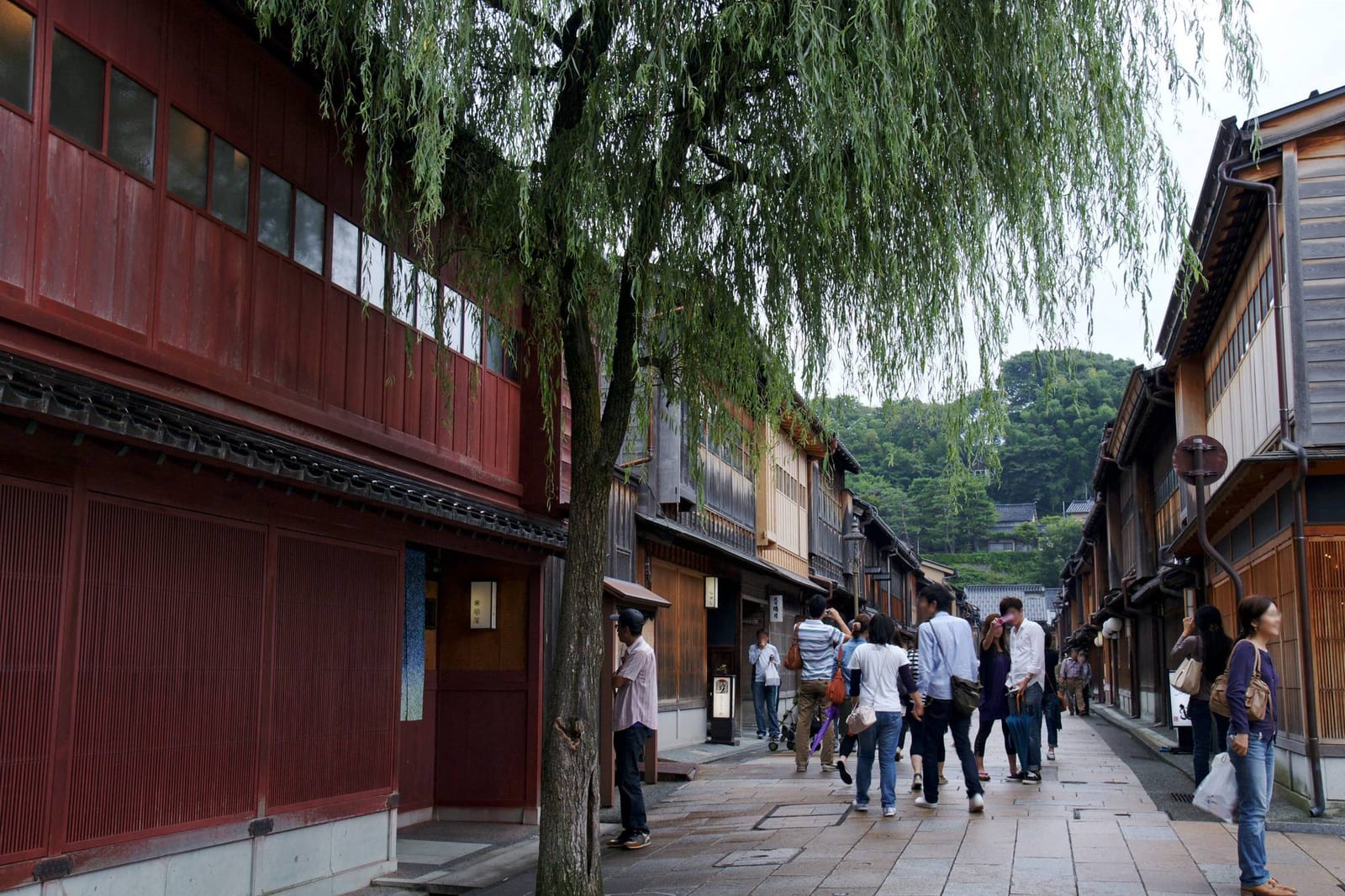
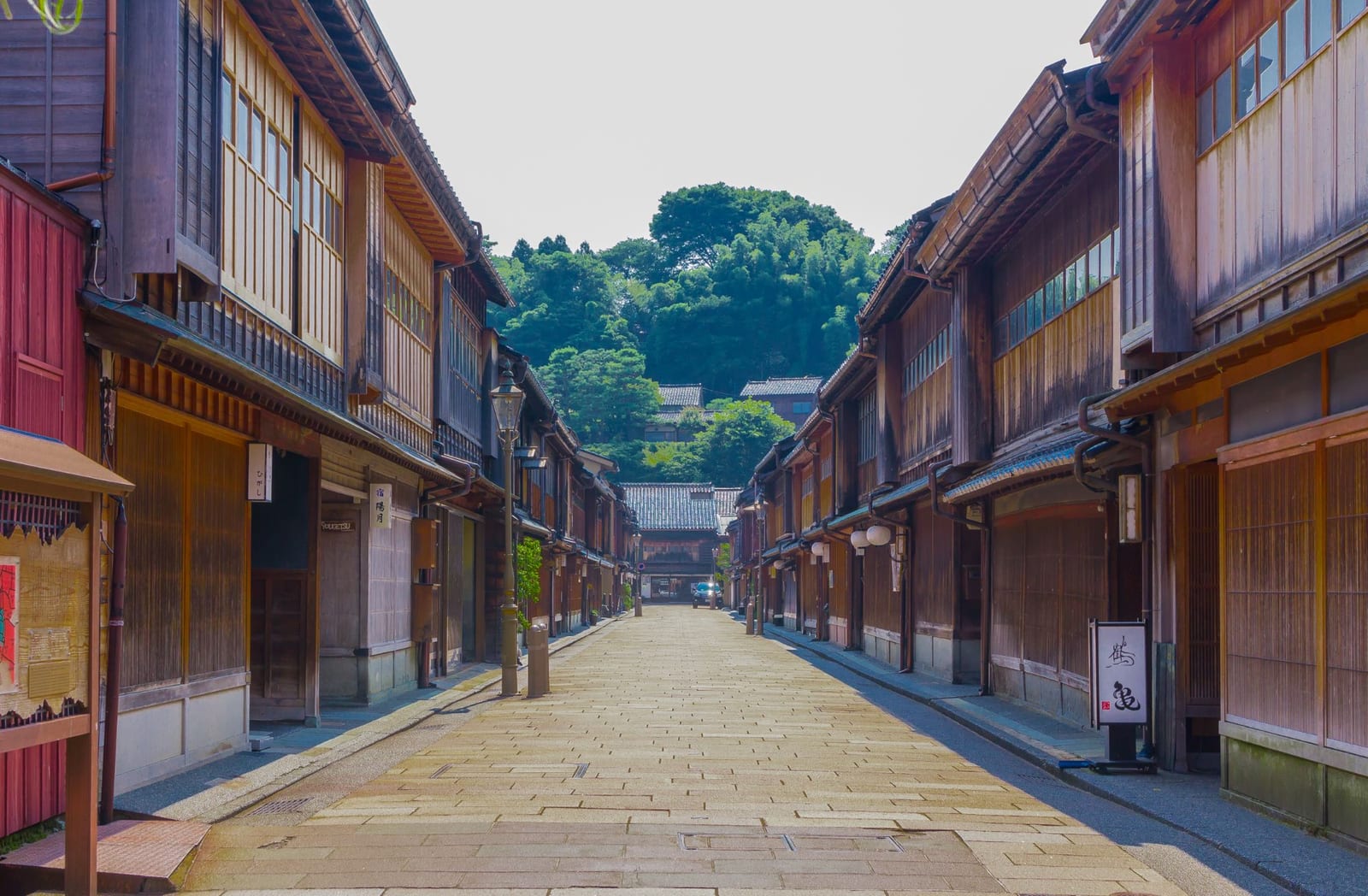
Fine kimusuko lattices below, high-ceilinged banquet rooms above. You cannot see in from outside, yet from inside you see everything — the essence of chaya style.
Gold beaten to one ten-thousandth of a millimeter. Kanazawa makes 99% of Japan's gold leaf, gracing crafts, cosmetics — even soft-serve ice cream.
In teahouses turned cafés, enjoy seasonal wagashi with matcha. Kanazawa's confectionery, ranked with Kyoto and Matsue, stays half a step ahead of the seasons.
Teahouses here still honor the "no first-time guests" tradition. As the sun sets, listen for shamisen and drums drifting through the lattices.
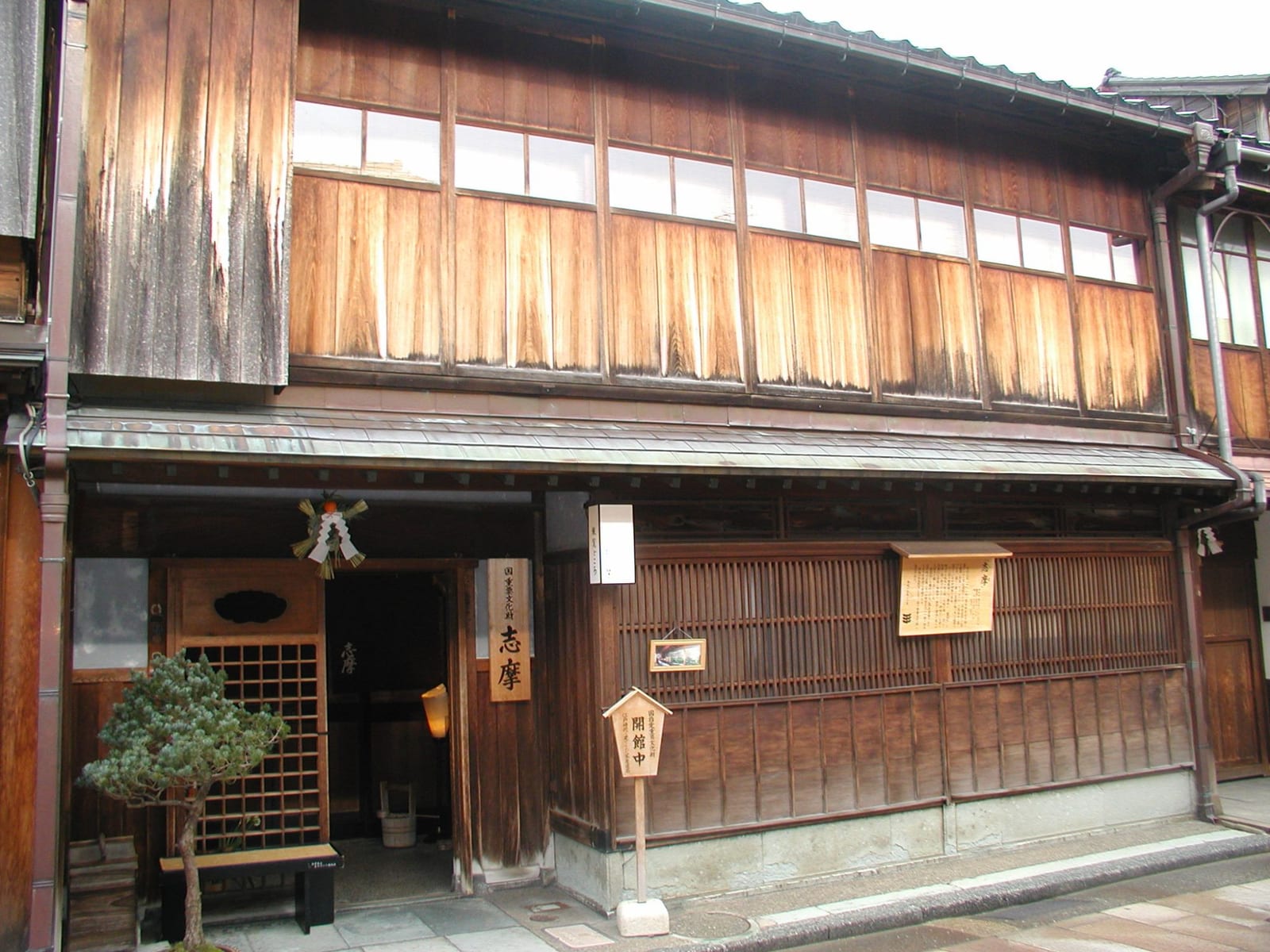
A teahouse built in 1820, now a National Important Cultural Property, open to the public. Upstairs, the banquet rooms preserve the world of chaya entertainment.
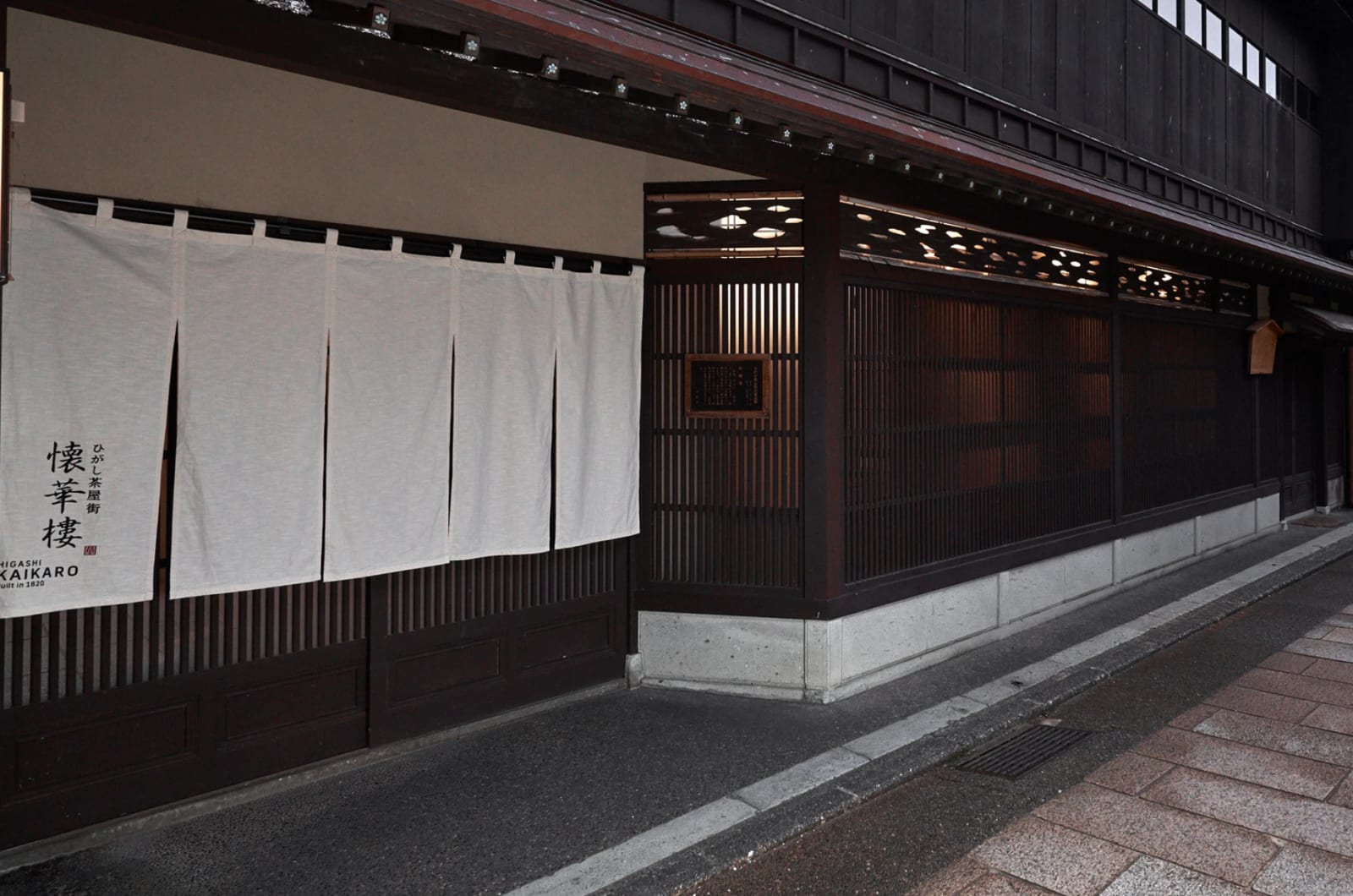
Kanazawa's largest teahouse. Tour it or enjoy the café by day — by night, it still hosts private geigi banquets closed to first-time guests.
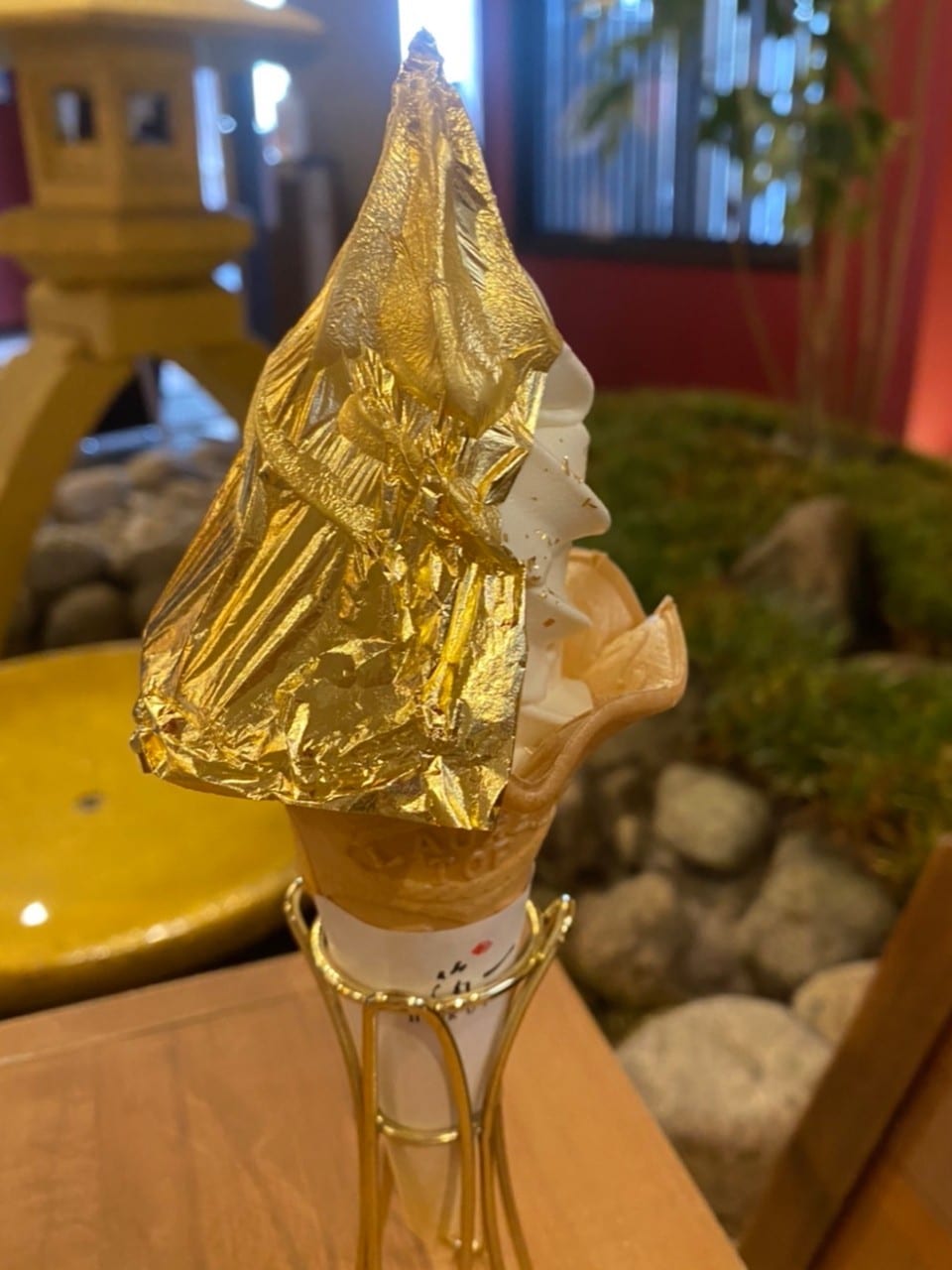
Gild chopsticks or a small box with real gold leaf — and don't miss the famous gold-leaf soft-serve ice cream.
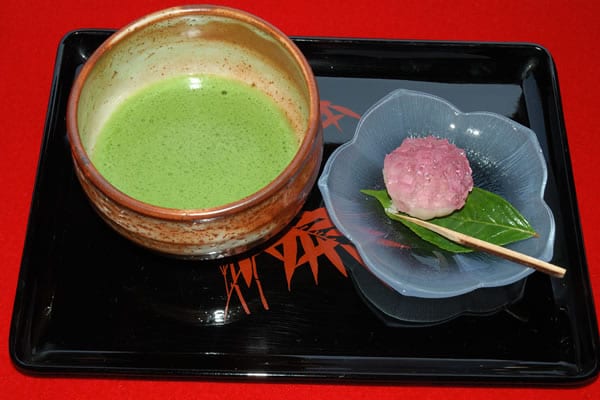
Cafés in renovated teahouses serve seasonal wagashi, matcha and roasted Kaga bōcha tea. The light through the lattices is exquisite.
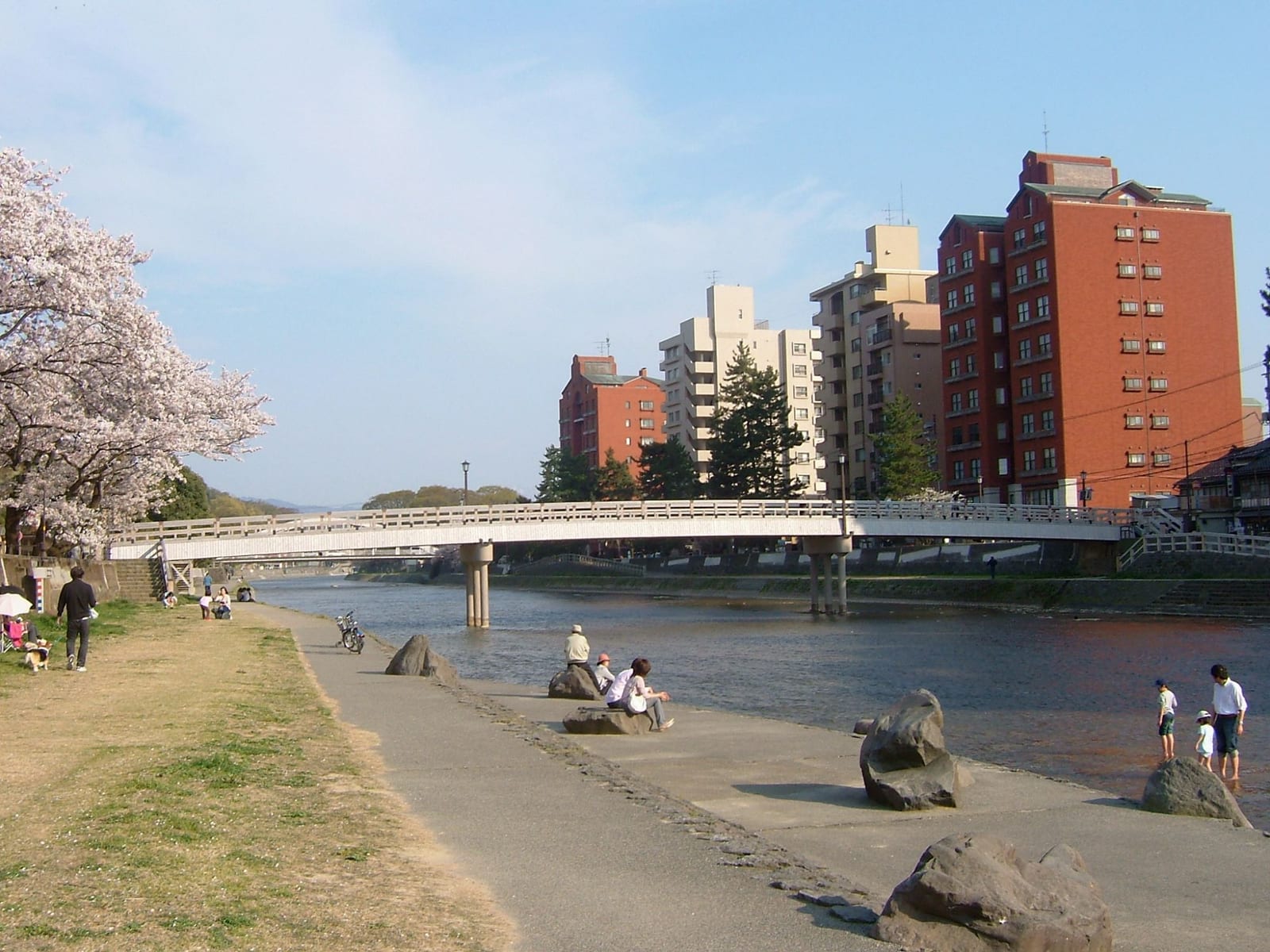
The graceful "feminine river" of Kanazawa. From the wooden Ume Bridge, take in the district's rooftops and the water.
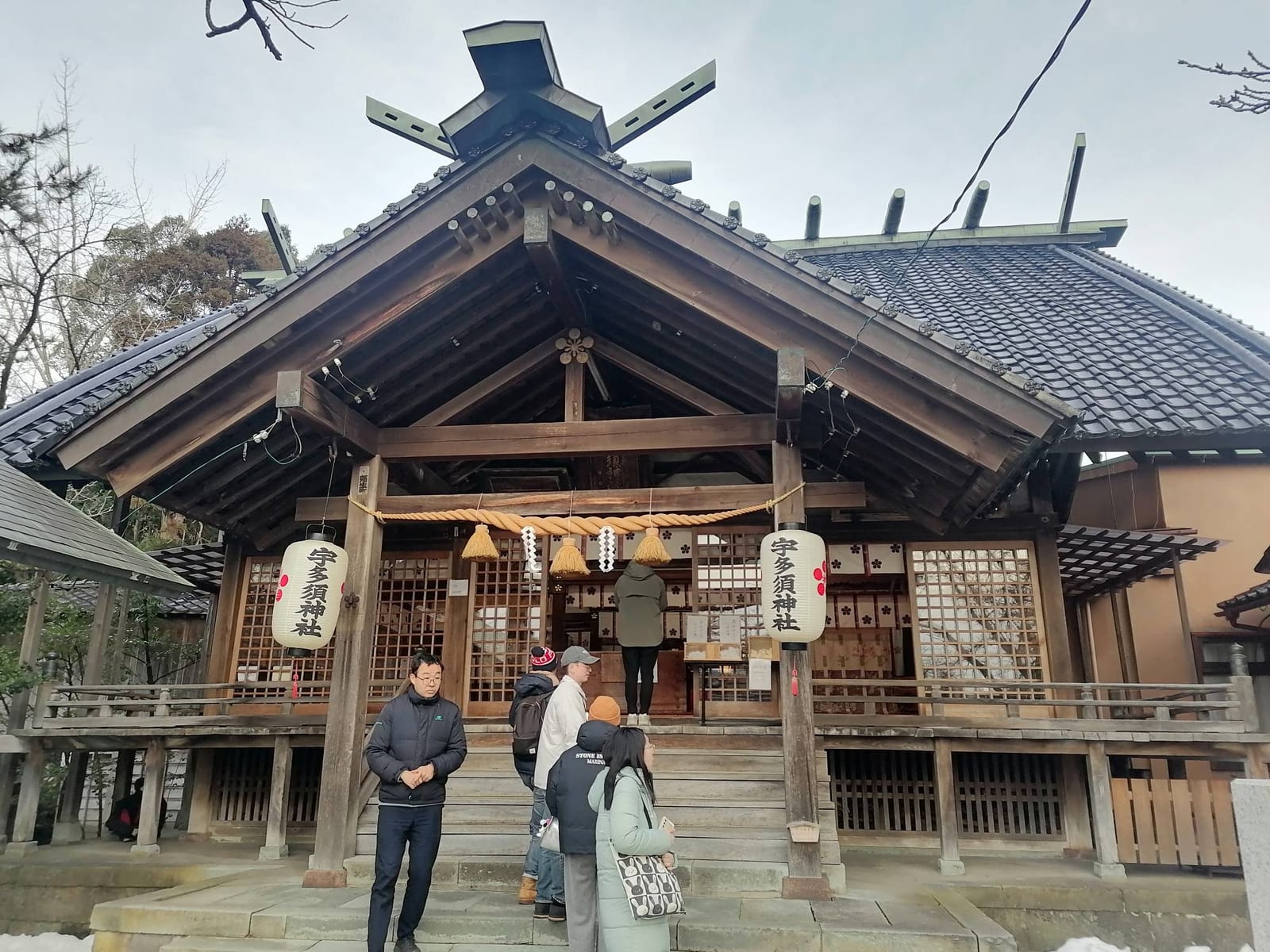
The district's guardian shrine, one of Kanazawa's five great shrines — famous for the geigi bean-throwing at Setsubun.
The riverside cherry trees tint the whole town pale pink.
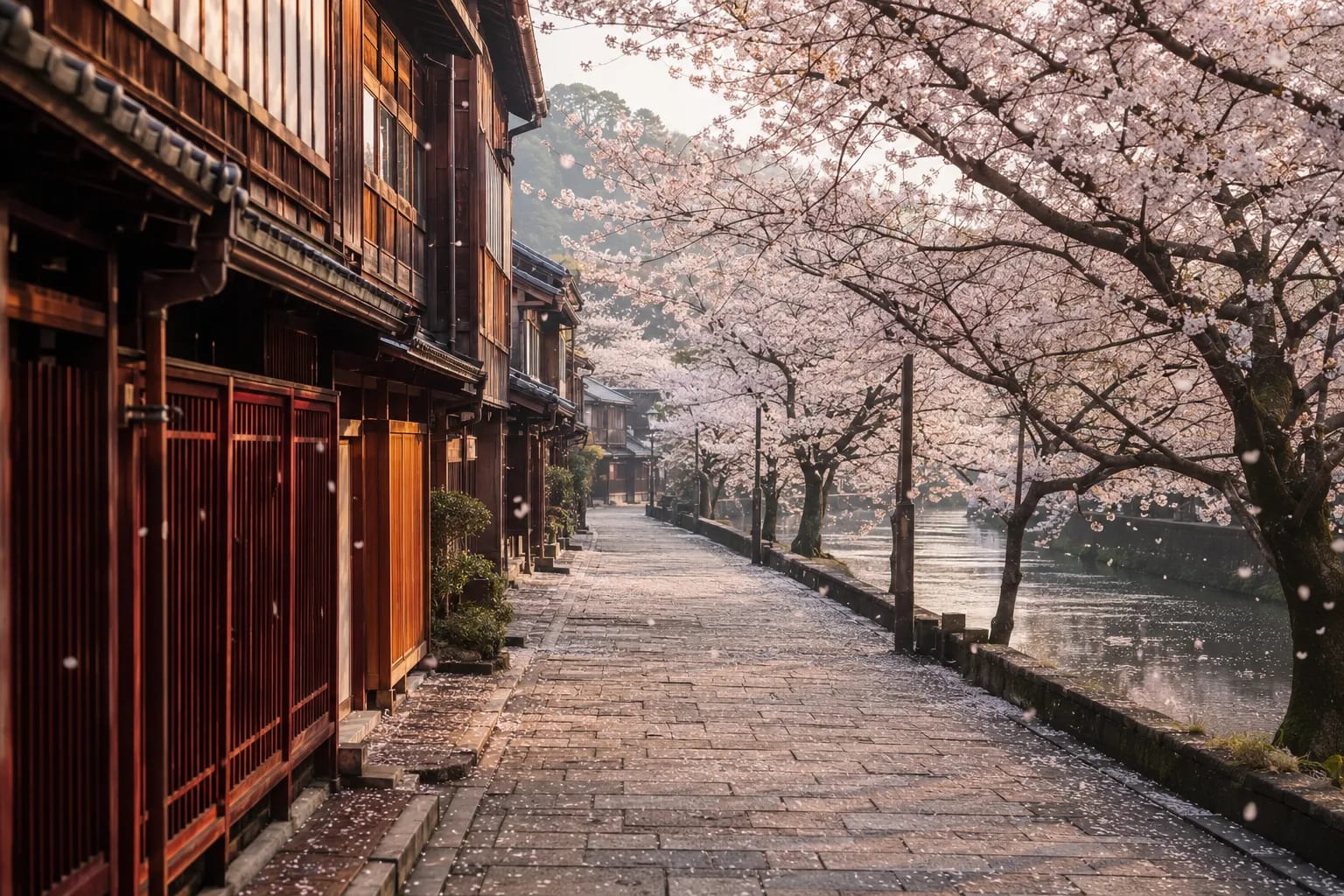
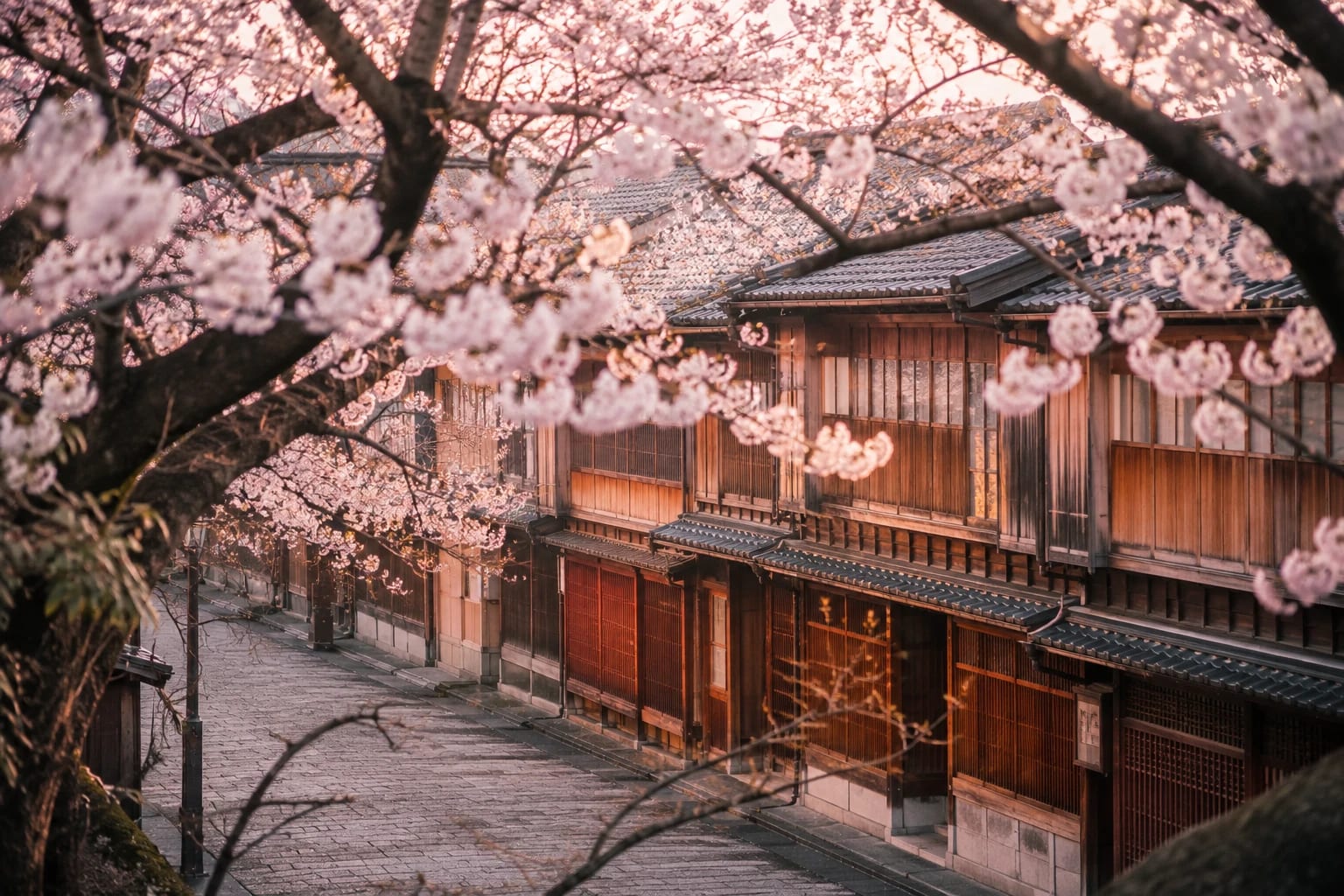
River breeze and festival music — dusk strolls at their best.
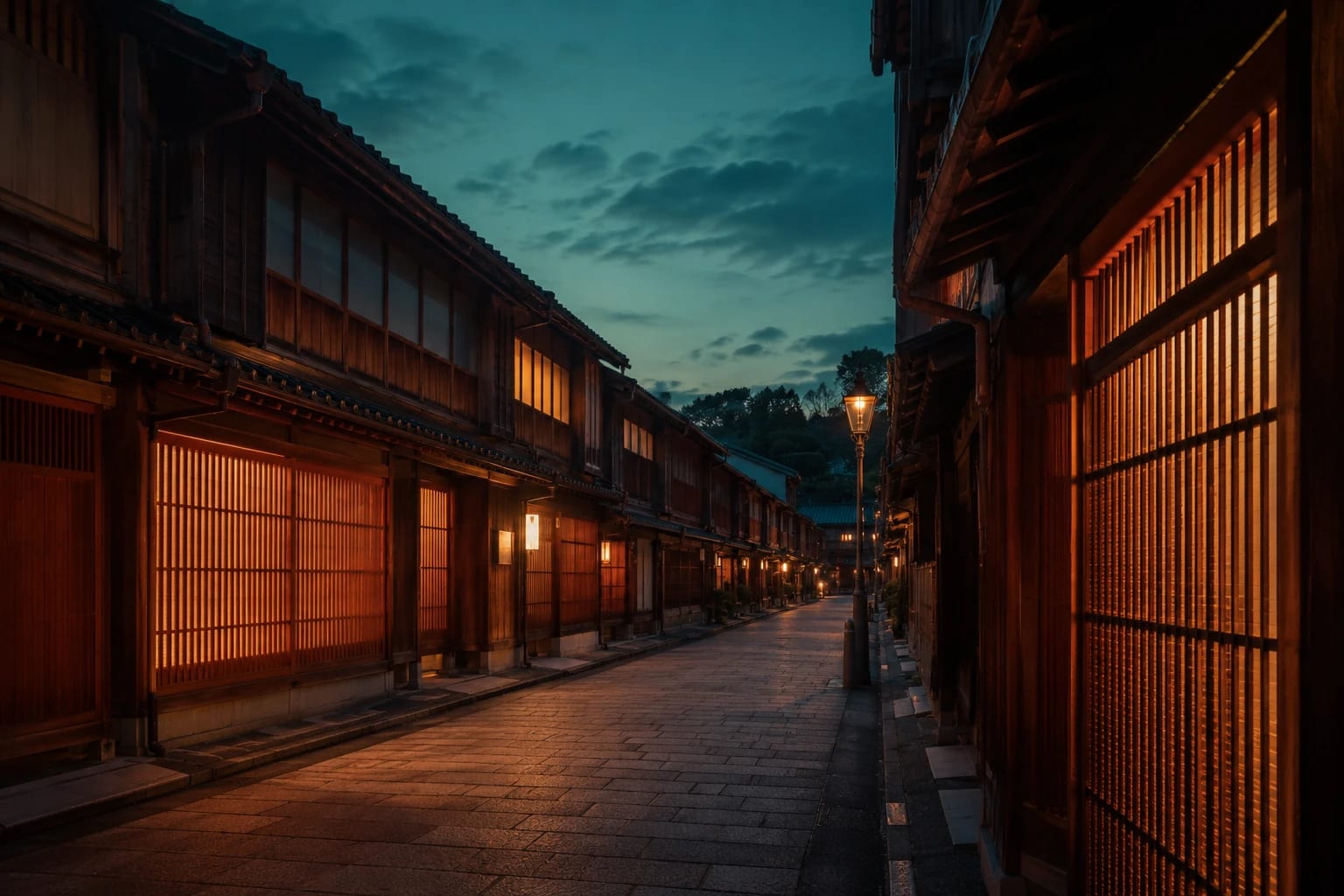
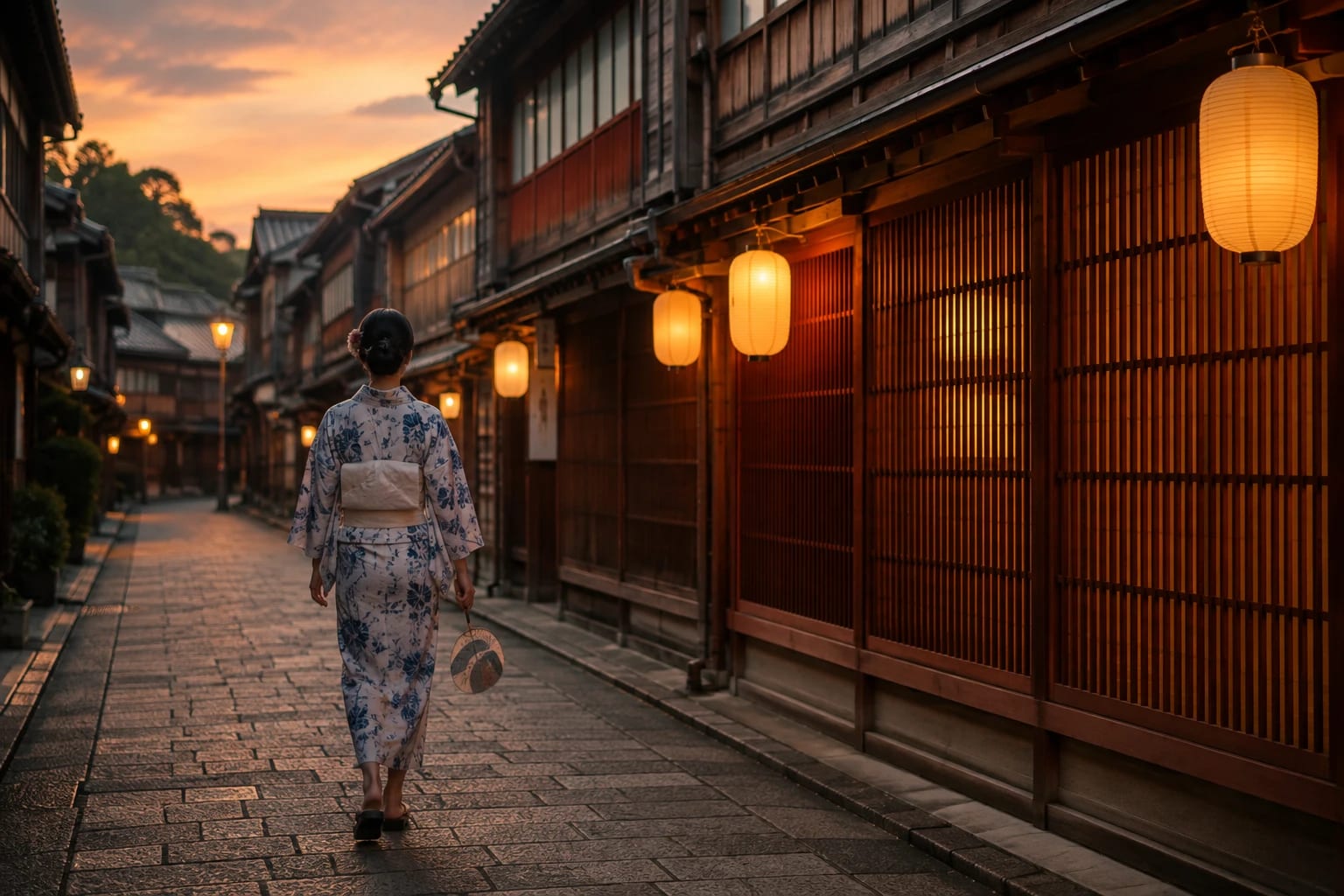
Deepening sunsets and autumn leaves set off the bengara red.
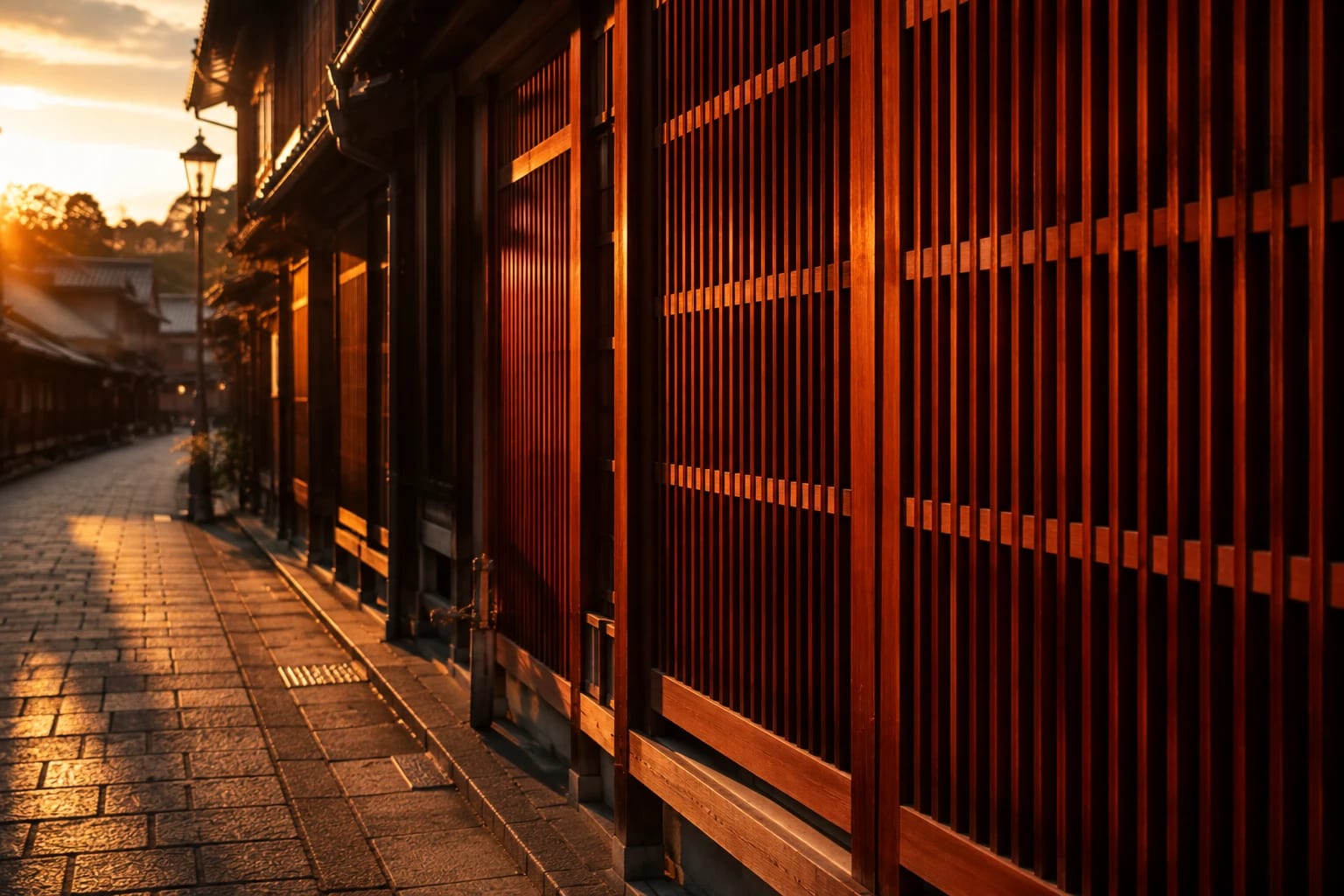
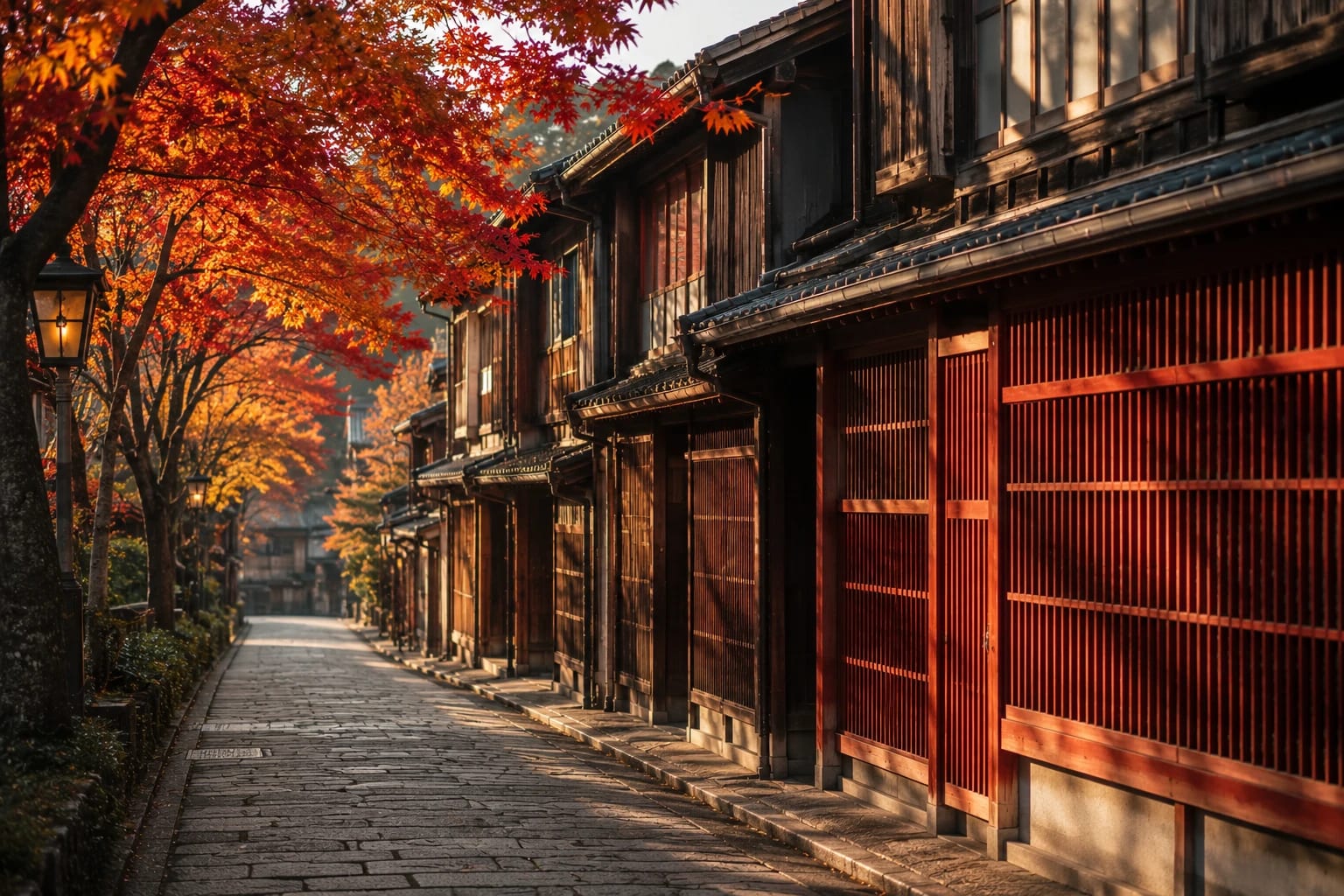
Snowy roofs and hushed stone lanes — the year's most serene face.
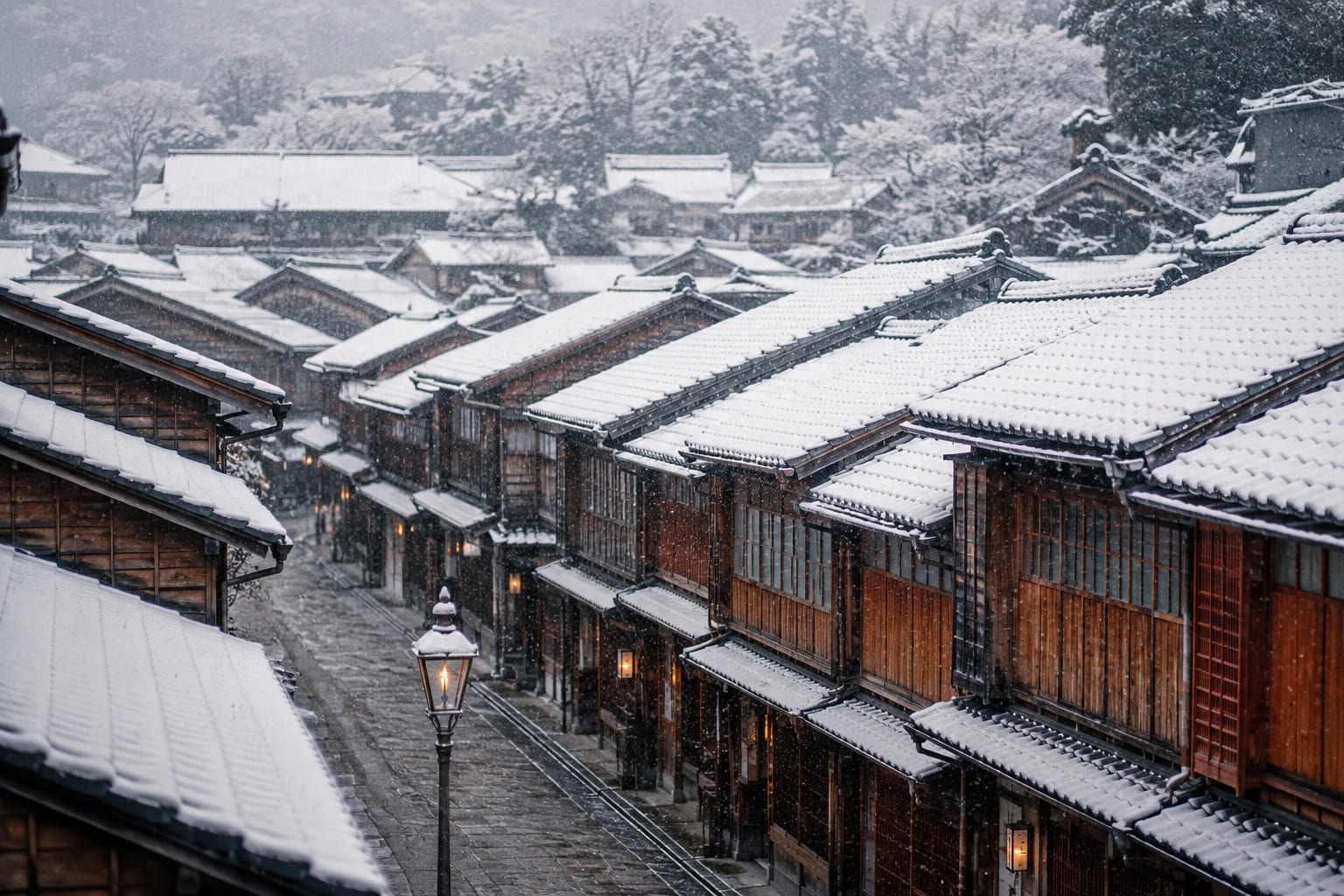
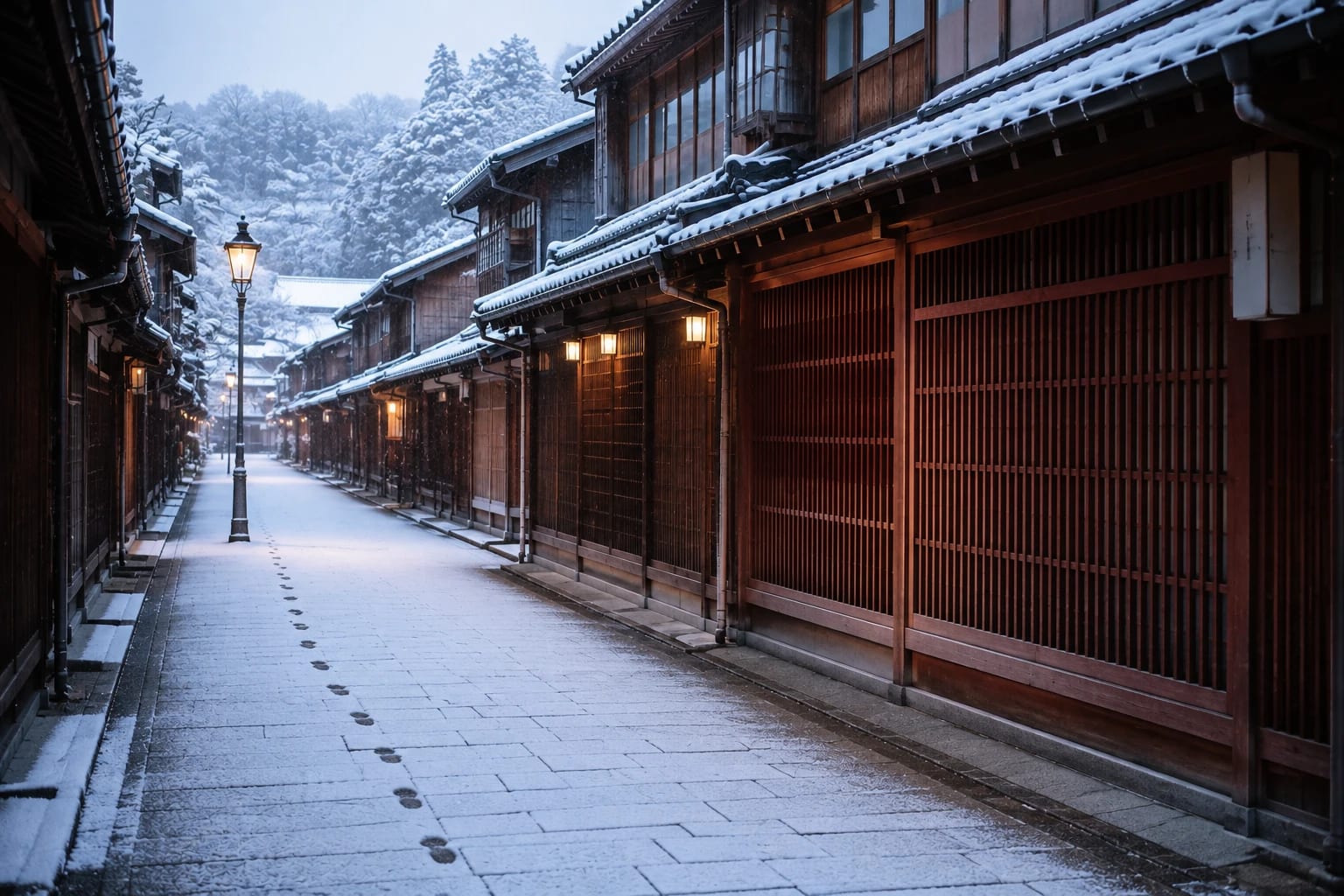
“A town shows its true face only to those who do not hurry.”
Kanazawa has three teahouse districts — Higashi, Kazue-machi and Nishi. With Higashi as your base, wander to two very different moods on foot or by bus.
Kanazawa's largest teahouse district — the home base of this guide.
Teahouses line the Asano riverbank in this quiet back lane, a few minutes' walk from Higashi.
Explore Kazue-machi →Near the Sai River, a calm street known for its confectionery shops.
Explore Nishi Chaya →Written by a local team that walks these lanes every day — only what we have confirmed on the ground: lunch spots, parking, rainy-day plans and more. Read before you wander.
This is a living neighborhood. Please keep quiet and be considerate of residents.